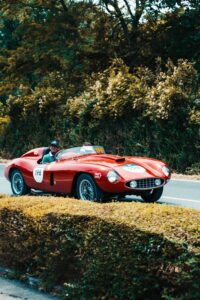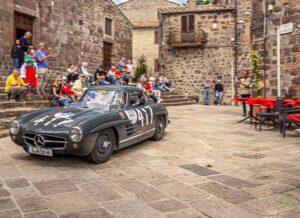
Brescia, Viale Venezia, just after noon. The sun is high, the street smells of gasoline and anticipation. Then the first car rolls onto the starting ramp. The sound is something you feel as much as hear. Not loud in an unpleasant way — more like a reminder that this is not an ordinary event.
The Mille Miglia has been called “the most beautiful race in the world” by Enzo Ferrari. Anyone who has experienced it understands why. More than 400 original historic vehicles from 1927 to 1957 cross Italy every year. No replicas. No staged exhibition. No artificial spectacle. The cars are authentic, and so is the history behind them.
This guide explains when to go, where to stand, and how to experience the Mille Miglia 2026 in a way that stays with you long after the final car passes.
Mille Miglia 2026 at a Glance: Route, Dates, and Highlights
The Mille Miglia follows the traditional figure-eight route through Italy, with both the start and finish in Brescia.
Between them:
- Five days of driving
- Around 1,000 miles through Italy
- Hundreds of historic vehicles
- Some of the most beautiful landscapes in Europe
The route changes each year, but the magic remains the same: the Mille Miglia turns ordinary Italian roads into a moving celebration of automotive history.
Brescia: The Start That Sets the Tone
The Mille Miglia begins at Viale Venezia in Brescia, where cars leave the starting ramp one by one.
There is no traditional race start. No mass departure.
Instead, each vehicle receives its own moment.
The process continues for hours, and that is exactly what makes it special. Every Alfa Romeo, Ferrari, Mercedes-Benz, Porsche, and Bugatti gets its introduction. The crowd gets time to appreciate every detail.
For many visitors, the atmosphere before the start is just as memorable as the rally itself. The cars are displayed, drivers prepare, and the anticipation builds throughout the morning.
Tuscany: Where the Mille Miglia Creates Its Most Iconic Images
Somewhere between Siena and the rolling hills of Tuscany, the Mille Miglia becomes exactly what people imagine it to be.
Historic cars winding through landscapes of vineyards, cypress trees, and medieval villages.
This is the section where the connection between Italian scenery and automotive history feels strongest.
As one German newspaper described it:
“Even automotive experts get bright eyes when they see this fleet of historic cars.”
If you only have one day to experience the Mille Miglia 2026, the Tuscan stages are among the most rewarding choices.
[Discover more about the best stops along the route in our Mille Miglia 2026 route guide.]
Rome and the Emotional Return to Brescia
After reaching Rome, the rally turns north again toward its final destination.
The last kilometers back to Brescia are among the most emotional moments of the entire event.
The finish at Viale Venezia brings together thousands of spectators as the final cars return after five days on the road.
Standing there as the last vehicles arrive, it becomes clear why many spectators describe the Mille Miglia as more than a classic car event.
It is a celebration of history, Italy, and the people who keep these cars alive.
Three Ways to Experience the Mille Miglia
1. Watch from the Roadside: The Free Spectator Experience
The Mille Miglia takes place on public roads and can be viewed freely from many locations along the route.
This is part of its unique character.
However, planning matters.
Without knowing the route and timing, many spectators spend hours waiting only to see the cars pass for a few seconds.
The best viewing locations require preparation:
- Knowing the route
- Arriving early
- Choosing the right location
- Understanding where the cars slow down or stop
2. Experience the Mille Miglia with Nostalgic
A curated Nostalgic Mille Miglia tour offers a completely different experience.
Instead of standing beside the road, you drive alongside the official participants in your own classic car.
Everything is organized:
- Historic vehicle prepared for you
- Carefully selected hotels
- Planned driving routes
- Best viewing moments
- Local experiences and cultural highlights
No searching.
No missing the best moments.
No complicated logistics.
As the Frankfurter Allgemeine Zeitung wrote:
“These journeys stay with you for a long time.”
[Discover Mille Miglia tours with Nostalgic.]
3. Enter as an Official Participant
The official Mille Miglia participant route is reserved for a very small number of collectors.
To enter, you need:
- A qualifying historic vehicle
- Registration in the Registro 1000 Miglia
- Significant preparation and documentation
- Acceptance by the selection committee
For most enthusiasts, this requires years of planning and a substantial investment.
A Nostalgic tour offers the opportunity to experience the same roads and atmosphere without owning a qualifying vehicle.
The Three Most Common Mille Miglia Planning Mistakes
Mistake 1: Only Planning for Brescia
The start in Brescia is spectacular, but it is not always the closest experience.
Crowds are largest here, and access to the cars can be more limited than expected.
Smaller towns along the route often offer more intimate moments.
[See our Mille Miglia viewing guide for the best spectator locations.]
Mistake 2: Booking Accommodation Too Late
Hotels along the Mille Miglia route often sell out far in advance.
Brescia, Siena, Rome, and other major stops can become difficult to book, especially close to the event.
Planning early makes the difference between a convenient experience and a complicated one.
Mistake 3: Not Understanding the Route
The Mille Miglia route changes every year.
Visitors who rely on previous years’ information may end up in the wrong location at the wrong time.
Understanding the current route allows you to experience multiple stages instead of seeing the cars only once.
The Mille Miglia Is More Than a Race
The Mille Miglia is not an event you simply watch and leave behind.
It is a journey through Italy, a connection between historic cars and historic places, and an experience that rewards preparation.
The difference between seeing the Mille Miglia and truly experiencing it comes down to planning.
Experience the Mille Miglia 2026 with Nostalgic.
[Explore Nostalgic Mille Miglia tours.]
Or read first:
[How the Mille Miglia began and why it remains legendary.]
FAQ: Experiencing the Mille Miglia 2026
Do you need a ticket to watch the Mille Miglia?
No. The Mille Miglia takes place on public roads, and roadside viewing is free.
However, certain official areas, checkpoints, or start zones in Brescia may have access restrictions.
When is the best time to visit Brescia for the Mille Miglia start?
The start at Viale Venezia begins around midday and continues for several hours.
For the full atmosphere, plan to spend the entire afternoon in Brescia.
Remember:
- Cars start individually, not as a group
- The best viewing positions fill early
- The hours before departure are also worth experiencing because cars are displayed publicly
Can you see the Mille Miglia cars at multiple locations?
Yes.
Because the rally uses public roads, spectators can experience the vehicles at different points along the route with proper planning.
Knowing the route and approximate timing is essential.
How early should you book hotels for the Mille Miglia?
As early as possible — ideally around one year in advance.
Hotels in Brescia, Siena, Rome, and other key locations along the route often sell out quickly.
Is the Mille Miglia worth visiting if you are not a classic car enthusiast?
Absolutely.
The Mille Miglia has become much more than an automotive event.
Many Nostalgic guests are drawn by:
- The beauty of Italy in early summer
- Historic cities and landscapes
- The unique atmosphere
- The feeling of being part of something truly special
What is the difference between a spectator and a participant?
A spectator watches from the roadside, free of charge and without registration.
Official participants drive the rally with an approved historic vehicle.
The difference:
- Participants need a qualifying vehicle registered in the Registro 1000 Miglia
- The application process can take years and requires significant investment
- With a Nostalgic package, you experience the Mille Miglia atmosphere alongside participants without owning such a vehicle or managing the process yourself.